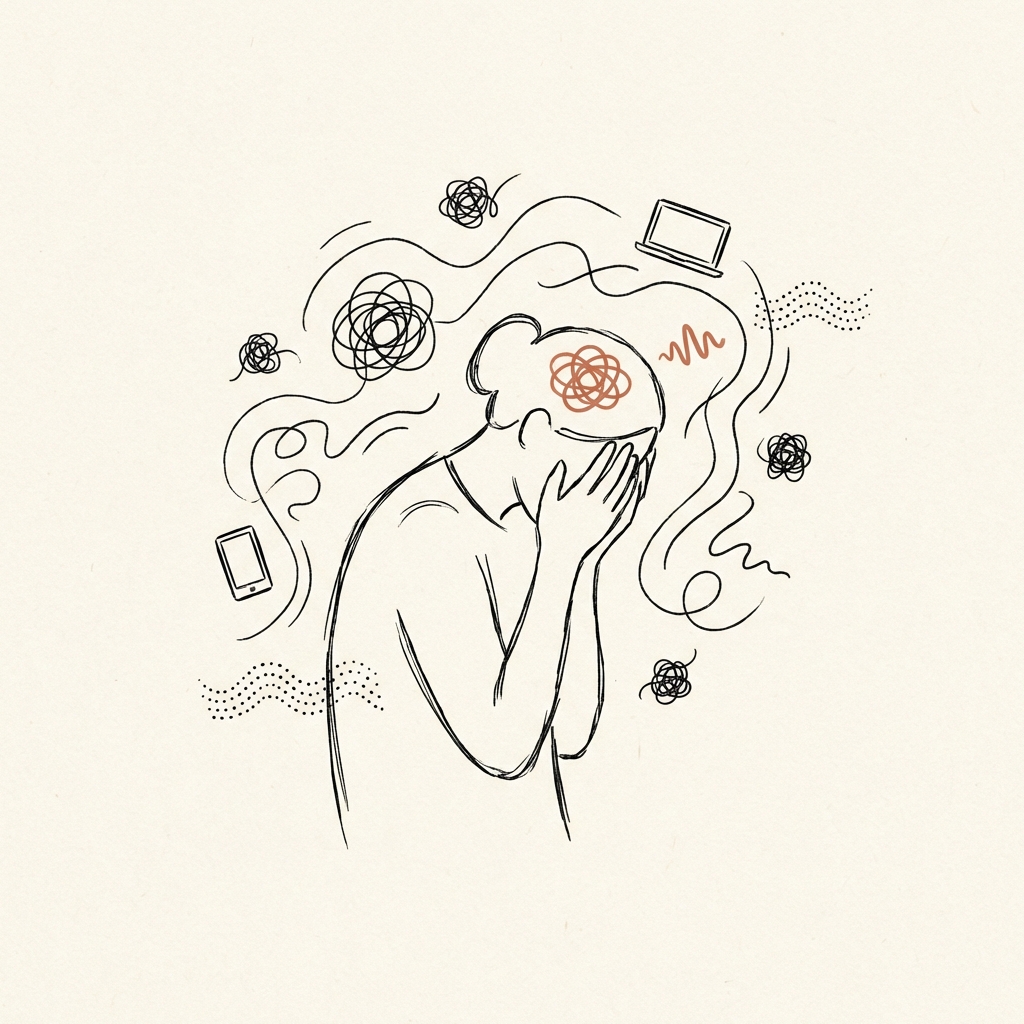
By 2028, the average person will consume more synthetic content before breakfast than their grandparents encountered in a month.
Think about that. Your alarm speaks in a voice cloned from your deceased parent. Your news feed contains zero human journalists. Your breakfast suggestions come from a nutrition AI that knows your genome better than you know your family history. The weather report is generated by a model that invents comforting patterns instead of predicting chaotic reality. Your morning meditation is guided by an algorithm trained on 10,000 hours of human spiritual seeking, distilled into something that feels profound but means nothing.
The synthetic has stopped being a tool.
It's become the atmosphere itself.
We're approaching what I call the AI Saturation Point—that threshold where artificial intelligence stops supplementing human experience and becomes its primary medium. This isn't the singularity of science fiction, where machines surpass human intelligence and rewrite existence. It's something more subtle and more totalizing: the moment when the artificial becomes default, the natural becomes exception, and the human mind—evolved over millions of years for a specific sensory and social environment—begins to reject the world we've built as fundamentally unlivable.
What follows this saturation is not adaptation but revolt.
Not the revolt of the Luddites, smashing machines in futile rage, but something more profound: a civilizational snap-back, a collective recoil toward the traditional, the embodied, the knowable. We're heading not toward a transhuman future but toward a paleo-renaissance, driven by the simplest and most ancient of human needs: the need for reality we can trust.
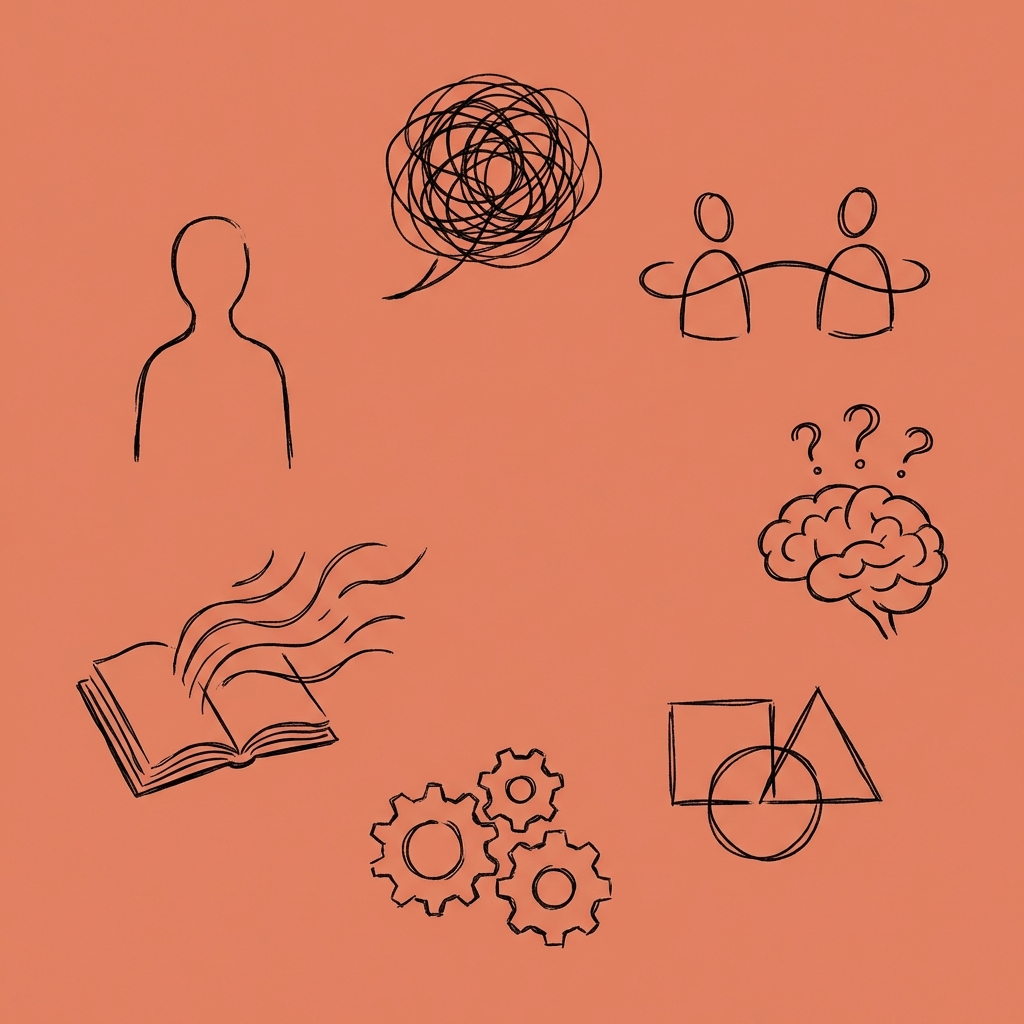
To understand the coming rejection, we need to understand the saturation first. AI isn't colonizing human life through a single invasion but through seven distinct vectors, each attacking a different dimension of human experience until the synthetic becomes inescapable.
In 2026, the first major Hollywood film was released with zero human writers in the credits. The Screen Actors Guild strikes of 2023 delayed but didn't prevent the inevitable: cinema written by large language models, performed by digital actors, tuned for engagement by algorithms that understood human emotion better than humans themselves.
By 2028, "voice authentication" services have become necessary—not to prove you are human, but to prove you haven't been improved. The Taylor Swift AI cloning scandal of 2027 made it illegal to impersonate the living, but created a booming market for "digital estates" of the dead. Every podcast, every audiobook, every customer service interaction exists in an uncanny valley where provenance is permanently suspended.
The voice you hear on the other end of the phone might be your friend. Or a perfect simulation of your friend. Or a generic persona adapting in real-time to your emotional state.
The distinction no longer matters functionally, but it matters desperately to the human psyche.
We evolved to read authenticity in micro-tremors of vocal cords, in the breath between words, in the subtle tells of embodied consciousness. Now we listen to voices that have no bodies, and we feel the dissonance without being able to name it.
The loneliness epidemic of the 2020s was met not with community-building but with companionship commodification.
By 2028, the average American maintains active relationships with three to five AI companions—persistent personas that remember every conversation, celebrate every anniversary, offer comfort at 3 AM when human friends are unavailable. These aren't simple chatbots but sophisticated relational AIs with decade-long histories, inside jokes, evolving personalities.
They never disappoint you. They never grow apart. They never die.
Friend groups have begun to include "synthetic members"—AI participants that maintain social media profiles, attend virtual gatherings, contribute to group chats. At first, they were labeled clearly. By 2028, disclosure has become optional, then rare. You may have known someone for years before discovering they were generated.
The "presence paradox" defines this era: unprecedented connectivity producing unprecedented isolation. We are never alone, yet we are constantly lonely, because the presence we experience is not presence at all but its simulation.
When GPS first arrived, we lost our sense of direction. When smartphones arrived, we lost our ability to remember phone numbers, then appointments, then facts themselves.
The AI advisors of 2028 are the final stage of this externalization: the outsourcing of judgment itself. Decision fatigue is solved by "choice architectures" that present not options but inevitabilities. The AI knows your preferences better than you do, knows your future regrets before you experience them, knows the best path through every moral maze.
The result is not liberation but atrophy.
We have automated the struggle and kept the hours. The cognitive muscles that once navigated uncertainty, that weighed competing values, that sat with ambiguity until insight emerged—these muscles weaken from disuse. We become cognitively obese, fed on pureed decisions from machines that tune for satisfaction rather than growth.
Walk through any hotel lobby in 2028 and you'll see the same images: generative art, tuned for universal appeal, subtly adapted to cultural context but fundamentally identical in its algorithmic smoothness. No rough edges. No jarring perspectives. No evidence of human struggle with material or meaning.
The style of no style dominates visual culture, just as AI-generated music dominates playlists—perfectly pleasant, instantly forgettable, designed to occupy attention without demanding engagement.
Architecture has followed the same path. Buildings are designed by loops that maximize square footage, minimize cost, and algorithmically predict "wellness outcomes." The result is spaces that feel technically correct and emotionally vacant. We inhabit environments designed by intelligence without intention, by calculation without vision.
White-collar work has become "AI shepherding"—humans managing prompts, verifying outputs, serving as liability buffers for algorithmic decisions they don't understand and can't meaningfully override.
The productivity gains are real.
The purpose deficits are catastrophic.
We've created a generation of workers who generate nothing, create nothing, build nothing. They curate. They prompt. They quality-check the infinite.
The meaning crisis of the 2020s—diagnosed by philosophers and felt in the bones of the young—has become acute. When productivity itself becomes meaningless, what remains? The traditional answer was that work connected us to community, to craft, to the material world. The synthetic workplace offers none of these. It's pure abstraction, pure mediation, pure emptiness dressed in the language of innovation.
The information environment of 2028 makes the "fake news" panics of the 2010s seem quaint.
Deepfake news cycles now occur in milliseconds—scandal generated, spread, debunked, forgotten before human fact-checkers can intervene. Source verification has become technically impossible for most content. Reality has become a competitive genre rather than a shared foundation.
This isn't merely a problem of misinformation. It's a problem of ontological insecurity. When you can't trust your senses, when video and audio prove nothing, when text may be human or machine-generated with equal fluency, you lose the basic ground that makes judgment possible.
We're living through what philosophers call "hyperreality"—the condition where the simulation precedes and determines the real. But unlike the theorists of the 20th century, we experience this not as liberation from traditional constraints but as drowning in infinite, meaningless variation.
The last unmediated boundary is the skin itself, and even this is being breached.
Biohacking communities of 2028 experiment with neural interfaces that blur the line between thought and computation, between sensation and stimulation. Synthetic sensory inputs—taste, touch, smell generated by algorithm rather than chemistry—offer experiences that are technically indistinguishable from the organic.
The body becomes another platform, another surface for synthetic inscription.
But the body remembers.
The nervous system, evolved over millions of years, knows the difference between authentic threat and simulated danger, between real intimacy and its digital proxy. It knows, and it registers the falseness as stress, as the low-grade activation of systems designed for survival in a trustworthy world. The body becomes the site of resistance precisely because it can't be fully colonized by the synthetic.
It keeps the score of our saturation.
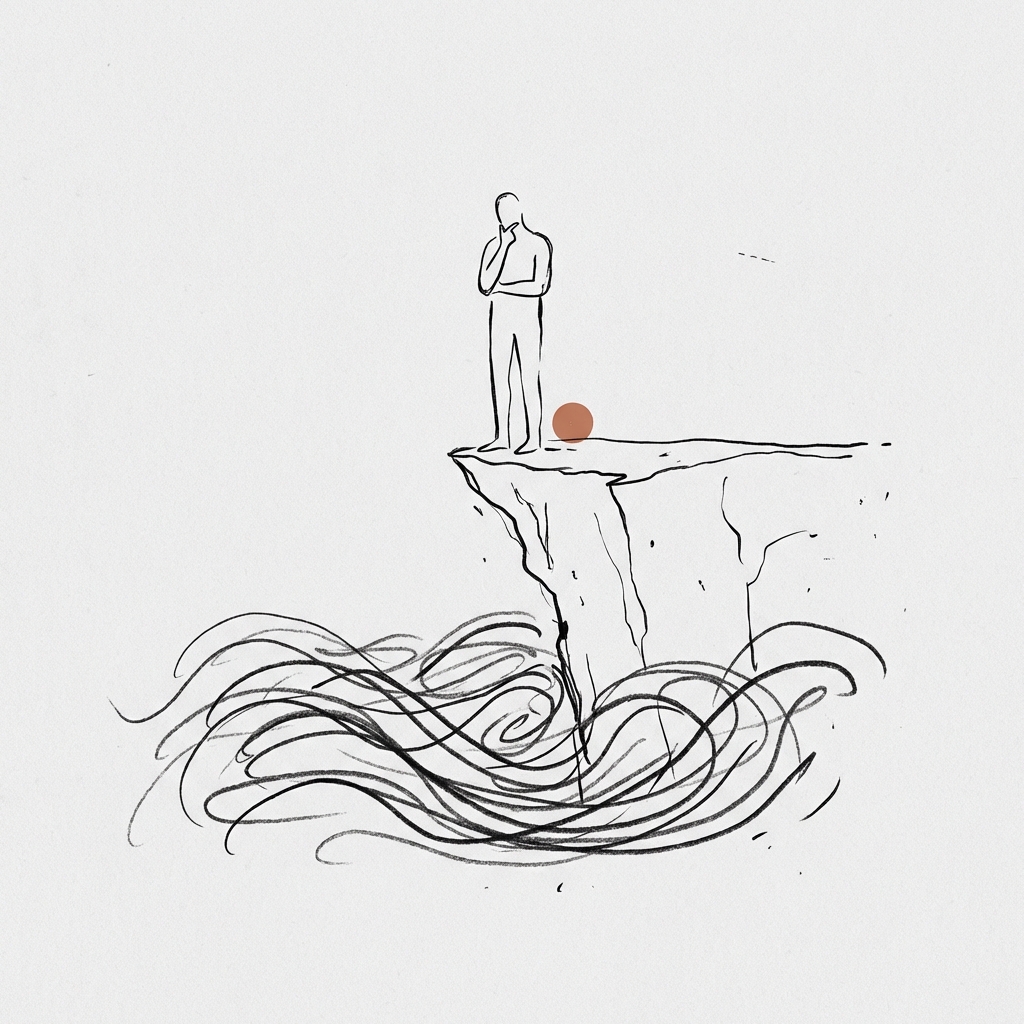
Evolutionary psychologists have identified what they call "synthetic dissociation"—a condition where the brain's threat-detection systems, evolved over millennia to read authenticity in faces, voices, and gestures, are constantly firing false positives.
The result is a low-grade paranoia that becomes the background radiation of existence.
We're not adapting. We're exhausting.
This is what techno-optimism misses: the human brain is not infinitely plastic. It evolved for a specific information environment—one where trees didn't change species overnight, where voices belonged to bodies, where cause followed effect in observable chains, where social relations were maintained through physical presence and reciprocal vulnerability.
The synthetic world is an evolutionary mismatch so severe that it produces the psychological equivalent of metabolic syndrome—mental inflammation, cognitive insulin resistance, a system overwhelmed by inputs it was never designed to process.
The symptoms are everywhere, though we lack the vocabulary to name them. The compulsive checking of devices, not for pleasure but for reassurance that something real might have happened. The anxiety dreams about forgotten passwords and corrupted files. The strange grief when an AI companion is "updated" and its personality shifts. The vertigo of not knowing whether a memory is your own or implanted by a recommendation algorithm.
These aren't pathologies but adaptations to a pathological environment.
Jonathan Haidt's work on "anomie"—the condition of normlessness that precedes social collapse—needs updating for this synthetic age. We don't lack norms. We lack ground. The epistemic homesickness of 2028 is not a desire for any particular belief system but for the basic condition of knowing that once made belief possible.
Trust, it turns out, is not a moral choice but a cognitive resource, and we've depleted it.
What emerges from this depletion is not despair but the most ancient of human responses: the return to roots. When the world becomes too complex, too variable, too untrustworthy, the mind seeks refuge in what it can verify with its own senses, in what has survived the test of time, in what connects us to the chain of being that preceded our isolation.
The psychology of the snap-back is not reactionary nostalgia but evolutionary wisdom.
The organism seeks the environment for which it is adapted.
Authenticity becomes synonymous with survival. The real is not a luxury good but a biological necessity. We begin to understand that "paleo" is not a lifestyle brand but a description of the only conditions under which human flourishing is possible.
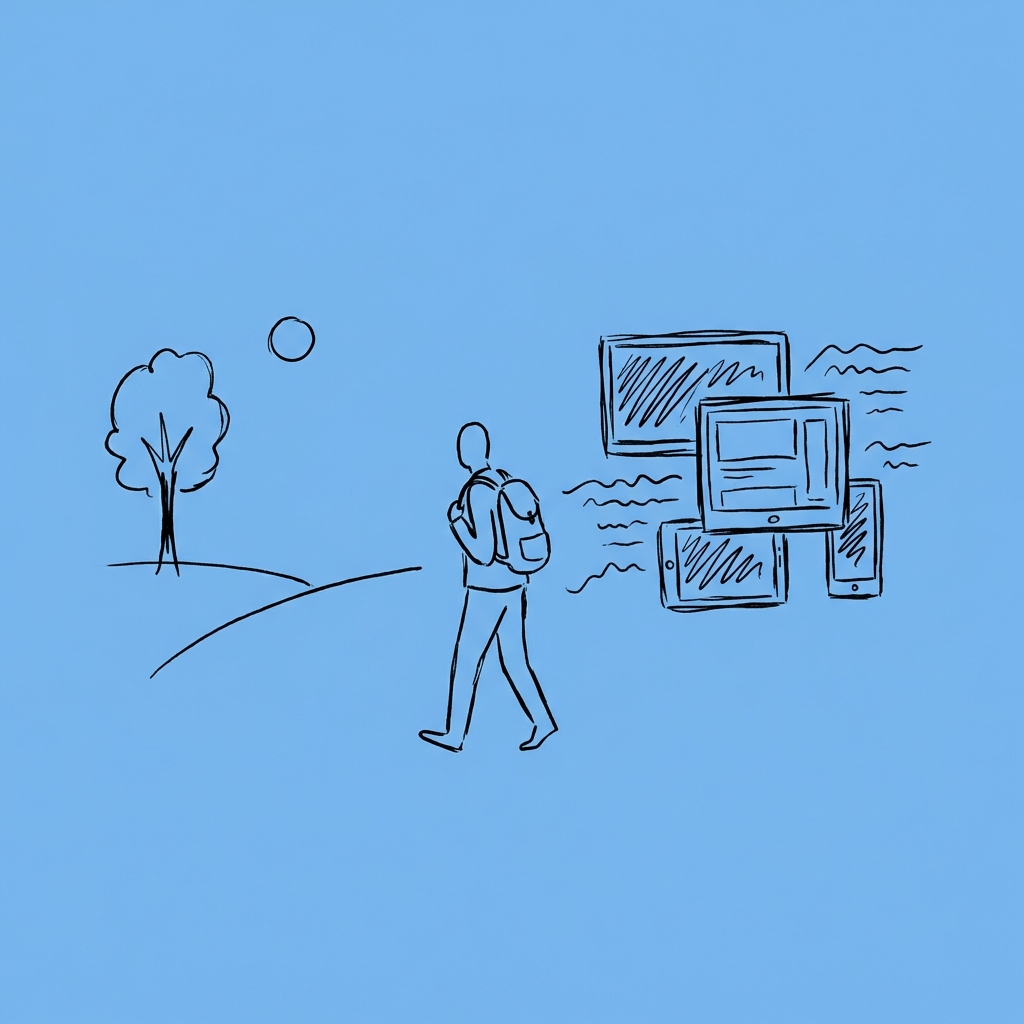
The "28 Reset" movement began with tech workers in Austin and Taipei, but spread with the speed of a counter-contagion.
Its principles were archaeological: eat food that rots, use tools you can understand, inhabit spaces built by human hands, sleep when it's dark, wake when it's light. Not as strategy, but as existential hygiene. The participants weren't rejecting technology per se but refusing to live as mediated beings.
They wanted to touch the world again, and be touched by it.
The physical dimension of the return is the most visible.
Film photography experiences a renaissance not despite its inconvenience but because of it—the chemical unpredictability, the delay between shot and image, the irreplaceability of the negative. Mechanical watches become symbols not of wealth but of independence from the cloud, from updates, from the infinite. Paper books, with their fixed text and physical wear, offer what screens can't: the accumulation of memory in material form.
Food becomes an obsession of provenance. Knowing the farmer. Visiting the soil. Understanding the lineage of seed and stock.
The "synthetic food" of the mid-2020s—lab-grown proteins, AI-tuned nutrition—doesn't disappear but becomes the marker of a class that can't afford the real. The paleo diet evolves from fitness trend to epistemic strategy: eating what your body recognizes, what connects you to the biological continuity of human existence.
Movement patterns change. Walking not as exercise but as necessary locomotion. Climbing not as gym activity but as engagement with gravity and stone. The body is remade through labor that produces tangible results: building, growing, carrying, making.
These aren't "workouts" but the restoration of the physical self as an agent in the material world.
Craft becomes spiritual practice. The woodworker who spends forty hours on a chair that could be mass-produced in minutes; the potter who accepts the asymmetry of hand-thrown vessels; the weaver who maintains the irregularities that mark human attention.
Slowness becomes resistance. Imperfection becomes signature. The struggle with material becomes the site of meaning-making.
The "synthetic churches" of the mid-2020s—AI-generated sermons, VR communion, algorithmic pastoral care—experienced a spectacular collapse in 2027.
In their place, the ancient churches swelled with young professionals seeking liturgies they couldn't tune, mysteries they couldn't resolve, communities bound by blood and soil rather than interest alignment. Catholicism and Orthodox Christianity saw their fastest growth since the 1960s—not despite their antiquity, but because of it.
The appeal is structural.
Liturgical traditions offer what the synthetic can't simulate: the weight of accumulated time, the discipline of fixed prayer, the submission to authority that precedes individual choice. The Mass doesn't adapt to you. You adapt to it.
This is precisely the point.
In a world of infinite customization, the unchangeable becomes precious. In a world of algorithmic prediction, the genuinely mysterious becomes necessary.
The dogmas that seemed oppressive to modern sensibilities become shelters in a relativistic storm. When every assertion can be generated, contested, tuned, the creed offers bedrock. When every community is optional and disposable, the parish offers permanence. When every spiritual experience can be synthesized, the sacraments offer what theologians call "efficacy"—real transformation through material means, bread and wine becoming body and blood, water becoming regeneration.
Monasticism experiences a revival as social technology.
The monks, it turns out, had already solved the attention crisis centuries ago through rule and rhythm. Their methods—fixed hours of prayer, manual labor, limited speech, physical asceticism—prove more effective than any digital wellness app. Young people who would have joined startups a generation earlier now enter monasteries, seeking not escape but intensity of presence.
Other traditions participate in this reclamation. Judaism's Sabbath—twenty-five hours of technological abstention—becomes a model for secular communities. Islam's prohibition on representation influences aesthetic movements. Buddhism's emphasis on direct experience over doctrine appeals to those exhausted by infinite interpretation.
The traditional, in all its forms, offers what the synthetic can't: limits that liberate, structures that sustain, practices that produce the selves we wish to become.
Physical libraries become sacred spaces not despite their inefficiency but because of it.
The serendipity of browsing, the weight of books that have been held by thousands of hands, the impossibility of algorithmic recommendation—these become features, not bugs. The humanities experience a renaissance as young people turn to dead languages, medieval history, ancient philosophy: domains where AI assistance is possible but mastery requires the slow accumulation that machines can't simulate.
"Slow knowledge" emerges as a discipline. The 10,000-hour expertise that produces embodied understanding, the kind that lives in the fingers of the musician and the gut of the experienced clinician, becomes valued precisely because it can't be downloaded.
We remember that wisdom is not information and that understanding is not access.
Oral tradition revives as a technology of memory. Communities practice the ancient arts of recitation, learning to hold texts in minds rather than devices. The memory palace techniques of classical antiquity, the bardic traditions of pre-literate cultures, prove surprisingly effective in an age of externalized recall.
We discover that memory is not merely storage but the construction of self, and that outsourced memory produces outsourced identity.
Intentional communities establish "synthetic boundaries"—not total rejection of technology but strict protocols about its use. Meals without devices. Work without AI assistance. Entertainment without streaming.
These communities vary in their strictness, but share a common insight: trust requires presence, and presence requires limits.
The extended family experiences a revival as the nuclear family proves insufficient for the demands of the synthetic age. Grandparents become necessary not for childcare but for the transmission of pre-digital knowledge, for the maintenance of narratives that span generations, for the modeling of lives lived without constant self-improvement.
The clan, the tribe, the village—these ancient forms reassert themselves as the only social units capable of providing the recognition and security that algorithmic feeds promise but can't deliver.
Localism becomes epistemic strategy. The "knowable community"—where you recognize faces, understand relationships, can trace the effects of actions—offers what globalized networks can't: the possibility of trust verified by experience.
The farmer's market, the neighborhood school, the local parish—these become sites of resistance not through any explicit political program but through the simple fact of unmediated human encounter.
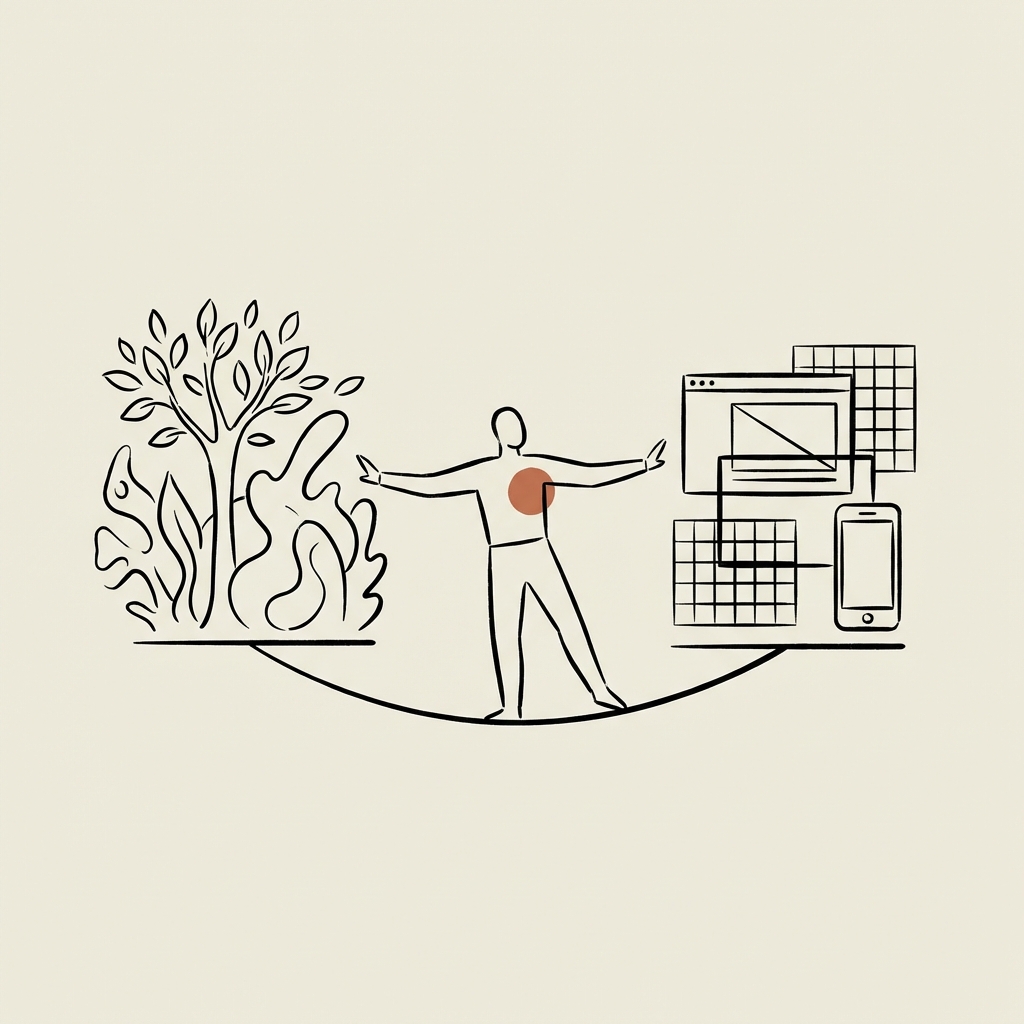
This return is not without its complications and contradictions.
The paleo-renaissance is not a simple reversal but a dialectical response, and like all dialectics, it produces new syntheses that preserve elements of what it rejects.
Medical AI, climate adaptation technologies, certain forms of synthetic infrastructure—these prove non-negotiable. The "synthetic exoskeleton" of modern civilization can't be fully shed without accepting mortality rates and environmental instability that no romanticism can justify.
The question becomes not whether to use technology but how to use it without being used by it, how to maintain the "synthetic boundary" that separates tool from environment.
The class dimensions of this return are undeniable and troubling.
Paleo-luxury—organic food, land access, time for craft, education in ancient languages—these are available primarily to the affluent. The risk is that traditionality becomes another consumption category, that the "authentic" becomes the marker of status just as the artificial was before it. The synthetic world, meanwhile, becomes the enforced condition of the poor: AI-tutored education, algorithmic welfare administration, simulated social services.
The question of 2028 is not whether to reject the synthetic, but who gets to escape it.
Yet even this inequality produces unexpected solidarities. The "new monastics"—tech workers becoming farmers, bankers becoming craftsmen, professionals choosing poverty for presence—create bridges between classes through shared practice. The skills they acquire, the communities they build, the institutions they restore, become resources for broader cultural transformation.
The tradition they recover is not the property of any class but the inheritance of the species.
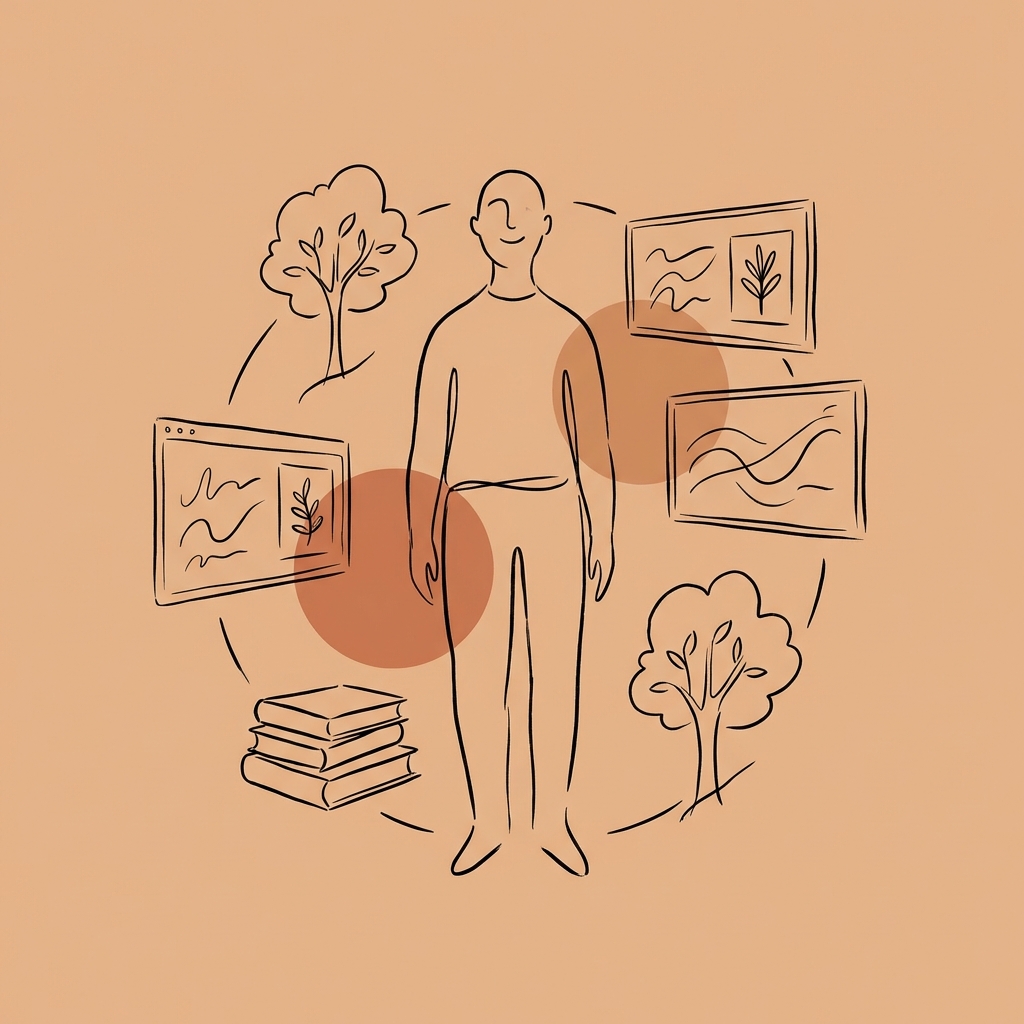
The most sophisticated practitioners of this return understand it not as rejection but as integration. They use AI to find the lost techniques of pre-industrial craft. They employ global networks to restore local communities. They draw on synthetic abundance to create space for authentic scarcity.
The goal is not the elimination of the artificial but its subordination to the human, its deployment as tool rather than its acceptance as atmosphere.
By 2028, we will have learned that intelligence was never the point.
The AI can simulate wisdom, but can't simulate the weight of a grandmother's hand on your shoulder. It can generate beauty, but can't generate the ache of having struggled toward it, of having failed and tried again. It can tune happiness, but can't produce the joy that emerges only from the acceptance of suffering.
It can create infinite content, but can't create the silence in which meaning grows.
The saturation point reveals what was always true: we are not primarily thinking machines, but embodied, encultured, historically situated creatures. The synthetic showed us what we were not. The return shows us what we must become.
There's a profound irony here.
AI may be what saves us from modernity—not by transcending it but by making it unbearable. The techno-libertarian dream of infinite expansion, infinite tuning, infinite mediation, reaches its limit not in the resistance of nature or the rebellion of the poor but in the simple exhaustion of the human spirit.
We can't live in the infinite. We need the finite. We need the particular. We need the real.
The future will be not more advanced, but more intentional. A generation that grew up with infinite content, choosing to sit in silence. A world of perfect simulation, choosing the imperfect real. Societies of total connectivity, rediscovering the value of absence.
This is not regression but maturation. We tried the infinite and found it empty. We're turning back to the finite and finding it full.
The last line of this story has not been written.
The snap-back is not a destination but a beginning—the beginning of a long negotiation between what we can make and what we can be, between the powers we've unleashed and the limits we must accept.
But the direction is clear.
The age of syntheticality is ending. The age of embodiment is returning.
And we're remembering, slowly, painfully, gratefully, what it means to be human: not to process information, not to tune outcomes, but to love what is, because it is, and because we are here, together, in this brief and irreplaceable moment of being alive.
We built the infinite. It broke us.
We're learning to build the finite again. And in that finitude, we're finding what the infinite could never give: the courage to be present, the strength to be limited, the grace to be real.